Difference Between Asus Tuf Gaming Be6500 and Nvidia Geforce Rtx 5070 Ti Explained
In the rapidly evolving landscape of gaming hardware, consumers often find themselves navigating a sea of alphanumeric model names that can be confusing at first glance. Two of the most talked-about components in the current market are the Asus TUF Gaming BE6500 and the Nvidia GeForce RTX 5070 Ti. While both carry the "gaming" pedigree and promise high performance, they serve fundamentally different roles in a laptop or desktop ecosystem. One is a cutting-edge networking solution designed to eliminate lag and provide the highest possible data throughput, while the other is a powerhouse graphics processing unit (GPU) responsible for rendering the complex environments, lighting, and textures of modern AAA titles. Understanding the distinction between these two is critical for any buyer looking to build or purchase a high-end gaming laptop or workstation.
The Asus TUF Gaming BE6500 represents the latest leap in wireless connectivity, utilizing the Wi-Fi 7 (802.11be) standard. In contrast, the Nvidia GeForce RTX 5070 Ti is a middle-to-high-end GPU built on Nvidia’s latest architecture, succeeding the highly popular RTX 40-series. This article provides a comprehensive deep dive into both products, exploring their technical specifications, performance benchmarks in real-world scenarios, and how they contribute to the overall gaming experience. Whether you are wondering why your laptop needs a "BE6500" designation or if the "RTX 5070 Ti" is the right sweet spot for your 1440p gaming needs, this guide covers everything you need to know.
The Asus TUF Gaming BE6500: A New Era of Connectivity
The Asus TUF Gaming BE6500 is not a graphics card, nor is it a processor; it is a high-performance Wi-Fi 7 networking solution often integrated into high-end TUF series gaming laptops or available as a standalone gaming router. The "BE" in its name signifies its adherence to the 802.11be standard, which is the technical nomenclature for Wi-Fi 7. For gamers, connectivity is often the unsung hero of the experience. You can have the fastest GPU in the world, but if your ping spikes during a competitive match or your cloud gaming stream stutters, the hardware's power is neutralized. The BE6500 is designed to ensure that the pipe carrying your data is as wide and fast as possible.
Wi-Fi 7 introduces several key technologies that the BE6500 leverages. The first is 320 MHz channel bandwidth. Previous generations were limited to 160 MHz. By doubling the bandwidth, the Asus TUF BE6500 can transmit significantly more data simultaneously, which is essential for 4K and 8K video streaming, VR gaming, and massive game downloads that now frequently exceed 100GB. Another critical feature is 4K-QAM (Quadrature Amplitude Modulation). This technology packs more data into each signal, resulting in a 20% increase in data transmission rates compared to Wi-Fi 6E’s 1024-QAM.
Perhaps the most significant advancement for gamers included in the BE6500 is Multi-Link Operation (MLO). Traditionally, a device connects to one Wi-Fi band at a time (either 2.4GHz, 5GHz, or 6GHz). MLO allows the Asus TUF Gaming BE6500 to use multiple bands simultaneously. This means if one band encounters interference—perhaps from a microwave or a neighbor's router—the data can seamlessly flow through another band without a disconnect or a massive jump in latency. For competitive players in titles like Counter-Strike, Valorant, or League of Legends, this stability is the difference between a win and a loss.
Performance and Reliability in the TUF Ecosystem
As part of the TUF Gaming line, the BE6500 is built with durability and sustained performance in mind. In laptop integrations, this means the networking card is shielded against electromagnetic interference and designed to maintain high speeds even as the laptop's internal temperatures rise during intense gaming sessions. When used as a router, the TUF Gaming BE6500 features dedicated gaming ports that prioritize traffic to your console or PC, ensuring that background updates on other devices don't throttle your bandwidth.
For the average user, the jump to BE6500 might seem like overkill if they only have a standard 100Mbps or 500Mbps internet connection. However, the benefits extend beyond just "internet speed." It improves LAN (Local Area Network) speeds. If you use a NAS (Network Attached Storage) to store your media library or if you frequently transfer large files between devices in your home, the BE6500 provides a wireless experience that finally rivals a wired Gigabit Ethernet connection. It is about future-proofing your setup for the next decade of digital consumption.
Nvidia GeForce RTX 5070 Ti: The GPU Powerhouse
The Nvidia GeForce RTX 5070 Ti is a core component that sits at the opposite end of the hardware spectrum. Built on Nvidia’s Blackwell architecture, this GPU is the engine that drives every pixel on your screen. The "70 Ti" tier has historically been the "enthusiast's choice," offering performance that nears the flagship "80" and "90" series cards but at a more accessible price point. In the 50-series era, the RTX 5070 Ti brings significant advancements in Ray Tracing, AI-driven upscaling, and power efficiency.
The RTX 5070 Ti features a substantial increase in CUDA core count over its predecessor, the 4070 Ti. Furthermore, it utilizes the next generation of GDDR7 memory. GDDR7 offers higher bandwidth and lower power consumption per bit, which is crucial for handling the massive texture buffers required by modern games at ultra settings. For laptop users, the RTX 5070 Ti is particularly impressive because it brings desktop-class performance into portable chassis. High-refresh-rate 1440p gaming, which has become the sweet spot for most gamers, is handled with ease by this card, often pushing frames well above 144fps even in demanding titles.
Discover deals on Laptops & Computers — updated daily.
View Offers →Artificial Intelligence and DLSS 4.0
One of the defining features of the Nvidia GeForce RTX 5070 Ti is its integration with DLSS 4.0 (Deep Learning Super Sampling). Nvidia has consistently used its Tensor cores to revolutionize how games are rendered. While DLSS 3 introduced Frame Generation, DLSS 4.0 on the RTX 5070 Ti takes this further with enhanced AI predictive modeling. This allows the GPU to render a game at a lower internal resolution (saving power and heat) and then use AI to upscale it to 4K with a level of detail that often surpasses native rendering. It also introduces "AI Texture Compression," which allows for hyper-realistic surfaces without overloading the VRAM.
Ray Tracing performance has also seen a generational leap. The RTX 5070 Ti features 4th Generation RT Cores, which are capable of calculating complex light bounces, reflections, and global illumination in real-time with significantly less performance "tax" than previous cards. In a dark room in a game like Cyberpunk 2077 or a horror title, the way light pierces through fog or reflects off a wet pavement is handled with a level of physical accuracy that was impossible just a few years ago. This isn't just about aesthetics; it's about immersion and, in some cases, gameplay advantages where seeing a shadow or a reflection can alert you to an enemy's position.
Detailed Comparison: Networking vs. Graphics
To truly understand the difference between the Asus TUF Gaming BE6500 and the Nvidia GeForce RTX 5070 Ti, we must look at how they interact within a single machine. Consider a high-end gaming laptop. The RTX 5070 Ti is the "muscles"—it does the heavy lifting of calculating physics, geometry, and lighting. The Asus TUF BE6500 is the "nervous system"—it connects that machine to the outside world. Without the BE6500, an enthusiast playing an online multiplayer game would suffer from "rubber-banding" or high latency, regardless of how beautiful the RTX 5070 Ti makes the graphics look. Conversely, without the RTX 5070 Ti, the BE6500 would deliver a lightning-fast connection to a game that looks like a slideshow.
| Feature | Asus TUF Gaming BE6500 | Nvidia GeForce RTX 5070 Ti |
|---|---|---|
| Component Type | Networking (Wi-Fi 7 / Wireless) | Graphics Processing Unit (GPU) |
| Primary Function | Data transmission, Latency reduction | Visual rendering, AI processing |
| Key Technology | Wi-Fi 7, MLO, 4K-QAM, 320MHz | Blackwell Arch, DLSS 4.0, Ray Tracing |
| Maximum Throughput | Up to 6.5 Gbps (Aggregate) | N/A (Graphics bandwidth measured in GB/s) |
| Real-World Impact | Faster downloads, Lag-free online play | High FPS, Ultra graphics, VR readiness |
| Compatibility | Requires Wi-Fi 7 Router for full speed | Requires high-wattage PSU and cooling |
Pros and Cons of the Asus TUF Gaming BE6500
Evaluating a networking component involves looking at its long-term utility. The BE6500 is a "future-proof" investment, meaning its full potential might not even be realized until internet service providers (ISPs) and home infrastructure catch up to its capabilities.
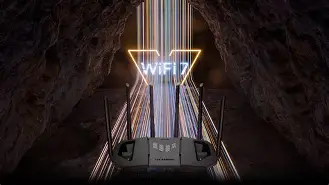
- Pro: Ultra-Low Latency - The Multi-Link Operation (MLO) significantly reduces the "jitter" that plagues wireless gaming, making it feel as stable as a wired connection.
- Pro: Massive Bandwidth - With up to 6.5 Gbps theoretical speeds, this hardware can handle multiple 8K streams and heavy background downloads simultaneously without breaking a sweat.
- Pro: Enhanced Security - Being a Wi-Fi 7 device, it supports the latest WPA3 security protocols, keeping your gaming network safe from intruders.
- Pro: Backwards Compatibility - It works perfectly with older Wi-Fi 6, 5, and 4 devices, ensuring your entire household remains connected.
- Con: Hardware Requirements - To see the "BE" speeds, you need a Wi-Fi 7 capable router and a matching internet plan, which can be an expensive upgrade.
- Con: Wall Penetration - While the 6GHz band used by Wi-Fi 7 is extremely fast, it has a shorter range and struggles more with thick walls compared to the 2.4GHz band.
Pros and Cons of the Nvidia GeForce RTX 5070 Ti
The RTX 5070 Ti is often the centerpiece of a gaming build. Its pros and cons revolve around its raw power versus its physical and financial demands.
- Pro: Exceptional 1440p and 4K Performance - This card is designed to dominate 1440p gaming at max settings and provides a highly competent entry into 4K gaming.
- Pro: AI Innovations - DLSS 4.0 allows users to play tomorrow's games on today's hardware by using intelligent frame generation and upscaling.
- Pro: Content Creation Powerhouse - Beyond gaming, the 5070 Ti is excellent for video editing (AV1 encoding), 3D rendering in Blender, and training local AI models.
- Pro: Power Efficiency - Despite the performance jump, the Blackwell architecture offers better performance-per-watt than the previous generation.
- Con: High Initial Cost - The "Ti" variants carry a price premium that may be hard for budget-conscious gamers to justify.
- Con: Size and Cooling - In laptops, this GPU requires beefy thermal solutions (fans and heat pipes), which can lead to louder fan noise under load.
- Con: VRAM Limitation - While sufficient for now, some ultra-heavy textures in the future might push the limits of its memory buffer at 4K resolution.
Buying Guide: Which One Matters Most to You?
When shopping for a new laptop or upgrading your PC, you will likely encounter these two components as part of a package. However, knowing which one to prioritize depends on your specific use case. If you are buying a laptop like the Asus TUF Gaming series, you might find a configuration that highlights both. Here is how to decide where your money should go.
The Competitive Online Gamer
If you spend 90% of your time in titles like Valorant, Apex Legends, or Overwatch 2, the Asus TUF Gaming BE6500 might actually be the more critical component for your "feel" of the game. These titles are not graphically demanding; even an older RTX card can push hundreds of frames. However, a single lag spike or a moment of packet loss can end your match. For this buyer, ensuring the laptop has the latest Wi-Fi 7 BE6500 card is a smart move to ensure a "wired-like" experience over airwaves.
The AAA Cinematic Enthusiast
If you live for single-player masterpieces like Black Myth: Wukong, Cyberpunk 2077, or the latest Star Wars titles, the Nvidia GeForce RTX 5070 Ti is your non-negotiable priority. You want every ray of light, every shadow, and every texture to be rendered in stunning detail. You likely play at higher resolutions where the GPU becomes the ultimate bottleneck. In this case, you should prioritize the GPU tier over the networking specs, as you can always use an Ethernet cable if your Wi-Fi is subpar, but you cannot "plug in" more graphics power later.
Discover deals on Laptops & Computers — updated daily.
Browse Now →The Content Creator and Streamer
For someone who games and streams to platforms like Twitch or YouTube, both components are vital. The RTX 5070 Ti handles the game rendering and uses its dedicated NVENC (Nvidia Encoder) to process the stream without impacting game performance. Simultaneously, the BE6500 ensures that the high-bitrate stream is uploaded to the internet without dropping frames. If you are in this category, look for a "balanced" machine that doesn't compromise on either side.
The Traveler and Remote Worker
If you travel frequently and rely on hotel Wi-Fi or public hotspots, the BE6500 is a godsend. Its ability to navigate congested airwaves and utilize multiple bands (MLO) means you are much more likely to have a stable connection in an environment where fifty other people are trying to use the same access point. While the RTX 5070 Ti is nice for a quick gaming session in your room, the connectivity of the BE6500 ensures you can actually get your work done or join a video call without interruption.
Integration in Asus TUF Laptops
It is no coincidence that the BE6500 networking and Nvidia's high-end GPUs are often found together in the Asus TUF Gaming laptop line. Asus has positioned the TUF brand to be the "rugged" and "high-value" alternative to their ROG (Republic of Gamers) line. By including the BE6500 networking, they are acknowledging that modern gaming is inherently social and online. The TUF laptops are designed with military-grade durability, and that philosophy extends to the "durability" of the connection. By pairing this with an RTX 5070 Ti, Asus creates a machine that is equally capable of high-fidelity visual output and high-speed data input.
Buyers should look for the specific "BE6500" designation in the laptop's spec sheet. Some lower-end TUF models may still ship with Wi-Fi 6 or 6E. While those are still very fast, they lack the Multi-Link Operation (MLO) and the 320MHz channel width that make Wi-Fi 7 a true generational leap. Similarly, ensure the GPU is the "Ti" version of the 5070, as the base 5070, while still excellent, typically has fewer cores and a smaller power envelope, leading to roughly 10-15% lower performance in heavy gaming tasks.
Conclusion
In conclusion, the Asus TUF Gaming BE6500 and the Nvidia GeForce RTX 5070 Ti are two distinct pillars of a modern gaming experience. The BE6500 is the guardian of your connection, a Wi-Fi 7 marvel that solves the age-old problem of wireless instability and bandwidth throttling. It is an investment in how you interact with the digital world, ensuring that your downloads are fast and your online presence is lag-free. It represents the "invisible" side of performance—the part you only notice when it’s not working correctly.
On the other hand, the Nvidia GeForce RTX 5070 Ti is the flash and the substance of your visual experience. It is the component that allows you to crank settings to "Ultra," enable path-traced lighting, and enjoy smooth, high-frame-rate gameplay that makes modern titles look like big-budget movies. It uses AI to push the boundaries of what silicon can do, providing a level of realism that was the stuff of science fiction a decade ago.
Understanding that these two products are not competitors but rather collaborators is the key to making an informed purchase. A high-end laptop or desktop is only as strong as its weakest link. By combining the rock-solid, next-gen connectivity of the Asus TUF BE6500 with the immense graphical processing power of the Nvidia RTX 5070 Ti, gamers and professionals alike can enjoy a seamless, immersive, and future-proof computing environment. When you look at the spec sheet of your next machine, you now know that "BE6500" means your connection is ready for the future, and "RTX 5070 Ti" means your eyes are in for a treat.