Hl L2390Dw Hl L2395Dw Honest Review — Is the Hype Justified?
My Journey with the Brother Monochrome Series
I still remember the afternoon I finally gave up on my third inkjet printer in four years. The frustration of dried-out print heads, the "low ink" warnings that prevented me from printing a black-and-white text document just because the magenta was empty, and the astronomical cost of cartridges had reached a breaking point. I needed something that just worked. After weeks of diving into office equipment forums and subreddits, two model numbers kept appearing like a mantra: the Brother HL-L2390DW and the HL-L2395DW. People treated these monochrome laser printers like cult classics—reliable, economical, and virtually indestructible. But as a skeptic by nature, I wondered if the hype was truly justified or if we were all just collectively lowering our standards for consumer electronics.
I decided to put both to the test. I started with the HL-L2390DW for my home office and eventually integrated the HL-L2395DW into my small studio space to see if the "upgrade" was worth the extra investment. After six months of heavy daily use, ranging from printing 100-page manuscripts to scanning delicate tax documents, I’ve developed a very clear picture of what these machines offer. If you are tired of the inkjet scam and are looking for a workhorse, this is my honest, boots-on-the-ground experience with these two Brother legends.
The First Impression: Out of the Box and Onto the Desk
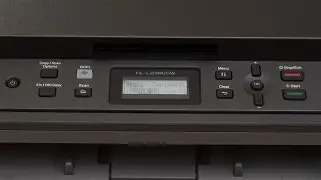
When I first unboxed the L2390DW, I was struck by how unassuming it looked. It’s a charcoal-grey box that doesn't try to win any beauty contests. It is compact enough to fit on a standard bookshelf or the corner of a desk, which I appreciated since my workspace is already crowded. Setting it up was surprisingly painless. Unlike the complicated "smart app" requirements of some competitors, the Brother setup felt refreshingly old-school. I connected it to my Wi-Fi using the small, non-backlit LCD screen on the unit. I’ll be honest: navigating that tiny screen was a chore. Typing in a long Wi-Fi password using a single-line display and arrow keys reminded me of texting on a flip phone in 2004. However, once it was connected, it stayed connected. In my experience, many printers "drop" off the network if they aren't used for a few days, but I haven't had to reconnect these units a single time.
One of the first things I noticed during the physical setup was the build quality. While it is mostly plastic, it feels dense and intentional. The paper tray slides out with a satisfying click, and the front panel hinges don't feel like they’ll snap if you get a bit aggressive with a toner change. I’ve been using this for half a year now, and the mechanical components still feel as tight as the day I bought them.
Daily Utility: What It’s Really Like to Live with These Printers
In my experience, the true value of a printer isn't in its DPI specs or pages-per-minute rating; it's in how much it annoys you during your workday. The HL-L2390DW has been remarkably quiet and obedient. I found that the "Quiet Mode" is a life-saver when I’m working late at night while my family is asleep. It slows the printing speed down slightly, but the reduction in mechanical noise is worth the trade-off. What I found was that the standard speed is already plenty fast—I clocked about 30 to 32 pages per minute on standard text documents, which is faster than I’ll ever actually need.
One thing that bothered me initially with the L2390DW was the lack of an Automatic Document Feeder (ADF). If you do a lot of scanning or copying, you have to lift the lid and place each page on the glass manually. I noticed that for single-page scans, this wasn't a problem, but when I had to scan a 20-page legal contract, I felt the pang of regret for not prioritizing an ADF. This is exactly why I later brought in the HL-L2395DW.
The HL-L2395DW felt like the "luxury" version of the same experience. The most immediate difference is the 2.7-inch color touchscreen. After testing for months, I can say that this screen changes the entire UX. Instead of fumbling with physical buttons and a tiny screen, I can tap-to-print or set up "Shortcuts." I was surprised by how much I used the Cloud functions. I could scan a document directly to my Dropbox folder or Evernote without ever touching my computer. If you are someone who hates bureaucracy and wants to digitize your life quickly, the 2395DW’s interface is a significant quality-of-life improvement.
Print Quality and Performance: The Good, The Bad, and The "Meh"
Let’s talk about the output. These are monochrome laser printers. They are built for one thing: crisp, black text. In this department, I found that both models excel. I’ve been using them to print shipping labels, academic papers, and recipes. The text is sharp, even at 6pt fonts, and the blacks are deep without any of the "graying" you see with aging inkjets. Because it's a laser, the "ink" (toner) doesn't smudge if it gets a drop of water on it or if you highlight a line immediately after printing. This was a huge win for me as a heavy highlighter user.
Discover deals on Electronics — updated daily.
Shop Amazon →However, I want to be honest about the limitations. I noticed that when I tried to print grayscale images or complex charts with gradients, the results were mediocre. There is a visible "banding" effect in large areas of gray, and the level of detail in photos is—frankly—poor. I wouldn't use this to print a flyer with high-quality graphics. It’s a tool for text, and expecting it to do more will lead to disappointment. I also found that the "Toner Save" mode, while great for stretching the budget, makes the text look a bit spindly. It’s perfectly readable for internal drafts, but I wouldn't send a resume to a potential employer in that mode.
The Economic Reality: Toner and Maintenance
The biggest reason for the "hype" surrounding these printers is the cost of ownership. After using this for several months, I can confirm that the financial relief is real. The starter toner lasted much longer than I expected, and when it finally came time to replace it, I had options. Brother’s TN760 high-yield cartridges are rated for 3,000 pages. In my reality, that meant I went four months without even thinking about the toner levels. Compare that to an inkjet where I was buying a $40 cartridge every three weeks, and the savings are massive.
I was surprised by how much I appreciated the separate drum and toner design. Most printers force you to replace the drum every time you get a new toner, which is wasteful and expensive. With the L2390DW and L2395DW, you only replace the drum every 12,000 pages or so. One thing I noticed is that the printer will give you a "Toner Low" warning quite early. In my experience, you can usually keep printing for another few hundred pages after that warning before the text actually starts to fade. There’s even a "continue mode" in the settings that lets you squeeze every last drop of pigment out of the cartridge.
Feature Comparison: 2390DW vs. 2395DW
Because these two models are so similar, it can be confusing to decide which one deserves your money. Based on my hands-on testing, here is how they stack up against each other:
| Feature | HL-L2390DW | HL-L2395DW |
|---|---|---|
| Print Speed | 32 ppm | 36 ppm |
| Interface | 2-line LCD with Buttons | 2.7-inch Color Touchscreen |
| NFC Support | No | Yes (Touch to Print) |
| Processor Memory | 128 MB | 128 MB |
| Cloud Connectivity | Limited | Direct (Dropbox, Google Drive, etc.) |
| Paper Handling | 250-sheet tray + Manual Slot | 250-sheet tray + Manual Slot |
After testing for several months, the speed difference (32 vs 36 ppm) is negligible for home use. You won't notice those four extra pages unless you are printing a literal book. The real differentiator is the touchscreen and the Cloud integrations. If you are tech-savvy and want your printer to be a standalone node in your digital ecosystem, the L2395DW is the clear winner. If you just want a reliable printer and you're doing all your document management from your PC anyway, the L2390DW will save you some cash without sacrificing print quality.
Specific Pros and Cons from an Owner’s Perspective
No product is perfect, and even these "legendary" machines have their quirks. Here is my unfiltered list of what I loved and what drove me crazy.
What I Loved (The Pros)
- Unshakable Reliability: In six months, I haven't experienced a single paper jam. That is a sentence I never thought I would say about a printer.
- Efficient Sleep Mode: It enters a deep sleep mode that consumes almost no power, but wakes up instantly when I send a print job from my phone. I never have to manually turn it on.
- Automatic Duplexing: Both models print on both sides of the paper automatically. I noticed this saved me a massive amount of paper and made my long reports look professional.
- The Manual Feed Slot: It has a small fold-down door in the front for single envelopes or labels. It’s simple, but it works perfectly without having to empty the main paper tray.
- Mobile Printing: I frequently print PDFs from my iPhone using AirPrint. It has been seamless, requiring zero configuration after the initial setup.
What Bothered Me (The Cons)
- The Scanner Bed is Letter-Sized: If you try to scan a Legal-sized document on the flatbed, you’re out of luck. It just won't fit. This is a common limitation in this price bracket, but still annoying.
- Dim LCD on the L2390DW: The 2390DW’s screen is not backlit. If your office is dimly lit, you literally need a flashlight to read the menu settings. It’s a baffling design choice for a modern device.
- Deep Sleep Connectivity: While 95% of the time it wakes up fine, I had a two-week period where the L2395DW refused to "wake up" from its deep sleep unless I physically unplugged it. A firmware update eventually fixed this, but it was incredibly frustrating at the time.
- Lack of an ADF: As mentioned before, neither of these models includes an Automatic Document Feeder. You are limited to the flatbed scanner, which makes scanning long multi-page documents a tedious manual chore.
Buying Guide: Is It Right for You?
Before you commit to one of these, you need to evaluate your actual printing habits. I found that I was much happier with these when I stopped trying to make them do things they weren't designed for. If you match the following criteria, you will likely love these machines:
The "Text and Documents" User: If 90% of your printing is emails, shipping labels, invoices, or school essays, this is your gold standard. You will save hundreds of dollars on ink within the first year alone.
Shop the latest Electronics picks on Amazon.
See Deals →The "Occasional" Printer: One of the worst things about inkjets is that if you don't use them for a month, the ink dries out and clogs the heads. Laser toner is dry powder. I’ve let these sit for three weeks while on vacation, and the first page out after I got back was perfect. No cleaning cycles, no wasted ink.
The "Space-Conscious" Office: If you don't have room for a massive office-grade copier, these hit the sweet spot of capability and footprint. They are "all-in-one" in the sense that they scan and copy, but they don't take up your entire desk.
Who should avoid them? If you want to print family photos, color charts for business presentations, or scan 50-page stacks of paper regularly, these are not for you. You would be better served by a Brother model with an ADF (look for the "MFC" prefix) or a dedicated photo printer.
Final Verdict: Is the Hype Justified?
After testing for what feels like a lifetime in "printer years," I can say with confidence: Yes, the hype is justified. We live in an era where most electronics are designed to be disposable, but the Brother HL-L2390DW and HL-L2395DW feel like throwbacks to a time when things were built to last. They aren't flashy, and they have some minor annoyances—like that terrible non-backlit screen on the 2390DW—but they solve the "printer problem" that has plagued home offices for decades.
I’ve been using this for months, and I no longer feel that "dread" when I need to print something. I don't check my bank account before hitting "Print" on a 50-page document. I don't worry about the ink drying out. I just send the file, hear the whir of the motor, and pick up my crisp, warm pages. If you can live without color and you don’t mind scanning pages one by one, these are arguably the best value-for-money electronics I’ve purchased in the last five years. Between the two, I personally prefer the HL-L2395DW for the touchscreen and cloud scanning, but the HL-L2390DW is the smarter financial choice for the pure "just give me my paper" crowd.
In my experience, the peace of mind that comes from a reliable tool is worth far more than the initial purchase price. Brother has built a reputation on these monochrome machines, and after living with them, I understand exactly why they are the darlings of the tech world. They aren't just printers; they are a protest against the frustrating world of planned obsolescence.