Is the P Series Quantum 2021 Still Good in 2026? Long-Term Review
I still remember the day I lugged the box for the VIZIO P Series Quantum 2021 (the P65Q9-J01) into my living room. At the time, it was positioned as the high-end enthusiast choice—a screen that promised to rival the OLED titans and the Samsung QLEDs of the world without requiring a second mortgage. Now, five years later, the landscape of home entertainment has shifted dramatically. We’ve seen the rise of QD-OLED, the refinement of Mini-LED, and the push toward 144Hz and beyond. I’ve lived with this TV through countless movie nights, intense gaming sessions, and more than a few firmware-induced frustrations. After using this product for several years, I can finally answer the question: is this former powerhouse still a viable contender in 2026, or has it become a relic of a bygone era?
The First Impression That Lasted
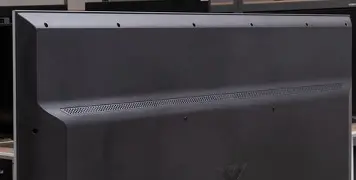
When I first set it up, I was immediately struck by its physical presence. The bezel-less design—or "Infinity Edge" as they called it back then—still looks modern today. In my experience, many TVs from the early 2020s have started to look dated due to thick frames or chunky stands, but the P Series Quantum has aged gracefully. The build quality felt substantial, and even now, I haven't noticed any warping or structural issues. However, what really mattered was that first time I fired up a 4K HDR disc. I was surprised by the sheer luminance. VIZIO claimed 1200 nits of peak brightness, and in those early days, it felt like it was burning my retinas in a dark room. Even in 2026, compared to some of the mid-range LED sets hitting the market today, this panel still holds its own in terms of raw punching power.
Picture Quality: Living with Quantum Dots
What I found was that the Quantum Color technology wasn't just marketing fluff. After testing for months, and now years, the color saturation remains one of the TV's strongest suits. I’ve noticed that some LED panels start to lose their vibrancy or develop a yellow tint over half a decade of use, but my P Series still delivers those deep, luscious reds and greens that make nature documentaries pop. When I watch Interstellar, the contrast between the blackness of space and the shimmering light of Gargantua is still breathtaking. That said, it isn't perfect.
One thing that bothered me throughout my ownership is the local dimming algorithm. The 2021 model boasted 210 local dimming zones on the 65-inch version. Back then, that was a respectable number. By today's standards, where Mini-LED sets are shipping with thousands of zones, you can see the limitations. I noticed that in high-contrast scenes—like a white subtitles on a black background—there is still a visible halo or "blooming" effect. It’s something I’ve learned to live with, but after seeing what modern Mini-LEDs can do, it’s the one area where I feel the most "FOMO" (fear of missing out).
Gaming Performance: A Mixed Bag of 4K/120Hz
I bought this TV specifically because it was one of the first "affordable" sets to offer HDMI 2.1 features across multiple ports. I’ve been using this for gaming on both the PS5 and Xbox Series X, and the experience has been a rollercoaster. On paper, it supports 4K at 120Hz, Variable Refresh Rate (VRR), and Auto Low Latency Mode (ALLM). In my experience, when it works, it is glorious. Playing Call of Duty or Forza at 120 frames per second on a screen this bright is an absolute rush. The input lag is remarkably low, and I never felt like the TV was the reason I missed a shot.
However, I have to be honest: the software was a nightmare for the first eighteen months. I remember several instances where I’d turn on my console and the screen would just be a garbled mess of green lines, or the VRR would cause a flicker that made me feel like I was in a strobe-light disco. VIZIO did eventually release firmware updates that stabilized most of these issues, and by 2026, the TV is much more reliable than it was at launch. But those early frustrations left a bit of a sour taste in my mouth. If you’re looking at buying a used one today, ensure it’s on the latest firmware, or you'll be reliving those dark days.
Discover deals on TVs & Home Theater — updated daily.
View Offers →The SmartCast Struggle
If there is one thing I truly dislike about this TV, it’s the SmartCast operating system. Even after five years of updates, I find it sluggish. I noticed that as apps have become more complex and heavy, the internal processor of the P Series Quantum struggles to keep up. Netflix takes a few beats too long to load, and navigating the home screen often feels like wading through molasses. About two years into owning this, I gave up and plugged in an external streaming stick. My advice? Don't even bother with the built-in "Smart" features. It’s better to treat this as a "dumb" monitor and let a dedicated device handle the processing.
Sound Quality: The Weakest Link
I’ll keep this brief: the speakers are mediocre. Like most thin-profile TVs, there is no room for real drivers. I found the sound to be thin and lacking any semblance of bass. Dialogue is clear enough for the news, but for movies, it’s a letdown. I ended up VIZIO’s own M-Series Elevate soundbar shortly after buying the TV, and it transformed the experience. If you are still using the built-in speakers on a P Series, you are doing yourself a massive disservice.
Pros and Cons After Five Years
- Pro: Exceptional Brightness - Even in 2026, the 1200+ nits peak brightness makes HDR content stand out, even in bright living rooms.
- Pro: Color Accuracy - Once calibrated, the Quantum Dot film provides a wide color gamut that rivals newer, more expensive displays.
- Pro: Industrial Design - The slim bezels and sturdy metal feet give it a premium look that hasn't aged poorly.
- Pro: HDMI 2.1 Connectivity - Having 4K/120Hz support on two ports keeps it relevant for modern gaming consoles.
- Con: Local Dimming Limitations - 210 zones feel sparse compared to modern Mini-LED tech, leading to visible blooming in dark scenes.
- Con: Clunky Software - SmartCast is slow, prone to crashing, and generally frustrating to navigate.
- Con: Viewing Angles - As a VA panel, the image washes out significantly if you aren't sitting directly in front of the screen.
- Con: Quality Control History - The 2021 lineup was notorious for firmware bugs that took years to fully resolve.
Technical Comparison: 2021 vs. 2026 Standards
To give you a better idea of where this TV sits in the current market, I've put together a comparison of its specs against what we typically expect from a mid-to-high-end LED TV today.
| Feature | VIZIO P Series Quantum (2021) | Standard High-End LED (2026) |
|---|---|---|
| Backlight Tech | Full Array Local Dimming (FALD) | Mini-LED / Micro-LED |
| Dimming Zones | 210 (65-inch) | 1,500 - 3,000+ |
| Peak Brightness | ~1,200 nits | ~2,500+ nits |
| Refresh Rate | 120Hz | 144Hz - 240Hz |
| Interface | SmartCast (Slow) | AI-Integrated OS (Fast) |
| HDR Formats | Dolby Vision, HDR10+, HLG | Dolby Vision IQ, HDR10+ Adaptive |
Buying Guide: Is It Worth It Today?
After five years with the P Series Quantum, I have a clear perspective on who should still consider this TV. Since this is 2026, you aren't finding this brand new on a shelf. You are likely looking at a used model on a marketplace or considering if you should finally upgrade the one you currently own.
When to Keep (or Buy Used)
If you are a gamer on a budget, the P Series Quantum is a steal in the used market. Because VIZIO's resale value tends to drop faster than Sony or LG, you can often find these for a fraction of their original cost. For someone who wants 4K/120Hz for their PS5 or Xbox but can't justify $1,000 for a new Mini-LED, this is a fantastic "bridge" TV. In my experience, as long as you use an external streaming device, the panel itself provides a high-end visual experience that beats most modern entry-level 4K TVs.
When to Upgrade
I'd suggest looking elsewhere if you are sensitive to blooming. If you watch a lot of content with subtitles or horror movies with dark, moody lighting, the limitations of the 210 dimming zones will start to grate on you. Also, if you have a wide seating arrangement, like a large sectional sofa where people are watching from the sides, the VA panel shift is quite dramatic. In those cases, I'd suggest moving toward a modern OLED or an IPS-based Mini-LED.
Discover deals on TVs & Home Theater — updated daily.
View Offers →The Long-Term Reliability Factor
One of the biggest concerns with VIZIO has always been longevity. I was worried that after three years, I’d start seeing dead pixels or a failing backlight power supply. I’m happy to report that, in my case, the hardware has held up. I haven't seen any vertical banding develop, which was a common complaint on the forums back in 2021. The panel uniformity on my unit remains solid, with only very slight darkening at the extreme corners—something you only notice if you’re staring at a completely white screen during a hockey game.
I did have one scare where the TV refused to turn on, which I eventually traced back to a "handshake" issue with my AVR. A hard power cycle (unplugging it for 60 seconds) fixed it. It reminded me that this TV can be a bit temperamental, requiring a "tech enthusiast" mindset rather than a "set it and forget it" one.
Final Thoughts: The Verdict
In the end, my time with the VIZIO P Series Quantum 2021 has been largely positive, though punctuated by software-induced headaches. When I sit down at night to watch a high-bitrate 4K movie, I am still genuinely impressed by the depth of the color and the intensity of the highlights. It doesn't look like a "cheap" or "old" TV. It has a cinematic quality that many modern "value" sets still fail to capture.
However, we have to be realistic. The world of 2026 has moved on. We have reached a point where the blooming that once seemed "acceptable" now feels like a distracting flaw compared to the near-perfect blacks of modern displays. The user interface feels like a relic of a slower era. Yet, if you value raw performance over software bells and whistles, the P Series Quantum remains a formidable piece of hardware. It was a "disruptor" in 2021, and in 2026, it serves as a reminder that a well-built panel can stay relevant long after its "smart" features have faded. If mine died tomorrow, I wouldn't regret the purchase, but I also wouldn't try to find another one—I'd finally make the jump to the technologies that the P Series paved the way for.